



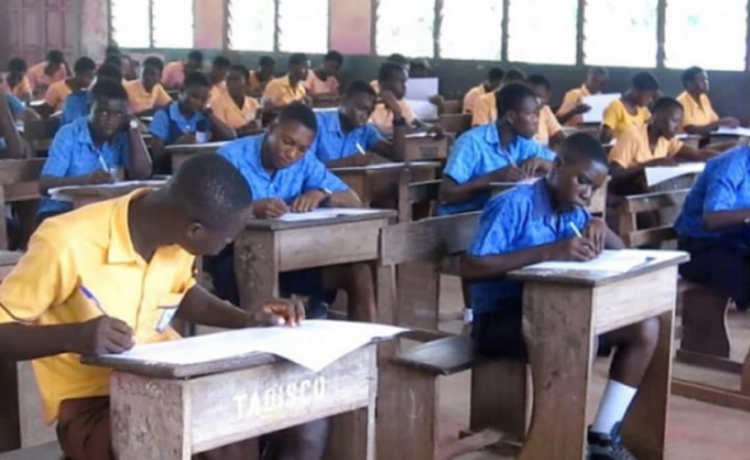
Africa Education Watch (Eduwatch) is urging the government to address the stark disparities in digital access as over 600,000 candidates prepare for the 2025 Basic Education Certificate Examination (BECE).
In a statement issued Tuesday, Eduwatch highlighted the troubling divide in Ghana’s basic schools, describing it as a case of “unequal access, unequal exam.” Thousands of students—especially those in deprived districts—will sit for the Computing paper without ever having used a computer.
“Two unequal groups will take the same exam: candidates from well-equipped schools with hands-on experience using computers, and those from deprived schools who learned computing through blackboard instruction,” the education policy think tank noted.
Eduwatch’s findings indicate that only 2 percent of schools in deprived districts have functional computers, despite serving over 2 million children. Many of these districts—primarily in the five northern regions, Oti, and Western North—face severe ICT infrastructure deficits. Even schools in better-resourced areas struggle to provide adequate access to computers for effective learning.
“No child should be academically disadvantaged due to where they live or their school’s resources,” Eduwatch stressed. “Transformative education must bridge inequality, not deepen it.”
To ensure inclusive digital learning, Eduwatch is calling for urgent government intervention, including the provision of ICT infrastructure, electricity, and trained personnel in underserved schools.
The 2025 BECE is set to take place from Tuesday, June 11 to Tuesday, June 18, with 603,328 candidates expected to participate nationwide. According to the Ghana Education Service (GES), the cohort consists of 297,250 males and 306,078 females from public and private schools.
With all materials and timetables dispatched to centers, the GES assures a smooth and credible examination process.