



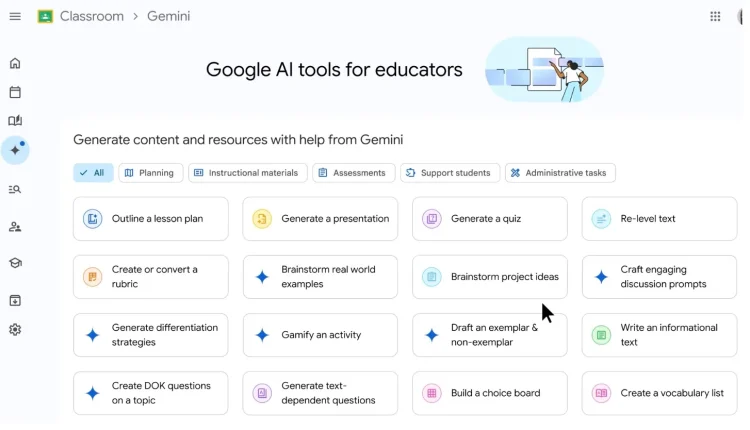
Google has announced a major expansion of its Gemini AI platform in education, unveiling over 30 new AI-powered tools designed to support teachers and students at the ISTE edtech conference. These updates include a dedicated Gemini app for schools, enhanced lesson planning features, AI-driven video creation with Google Vids, and the ability to build custom AI assistants called “Gems” tailored to individual classrooms.
The tech giant aims to make AI an integral part of teaching, offering tools that help educators personalize learning and maintain academic integrity in an era where generative AI models like ChatGPT are reshaping classrooms globally. With Gemini now freely available to all Google Workspace for Education users, teachers can create interactive study guides and offer real-time AI support that keeps AI use within the classroom’s control.
However, despite the global rollout, significant challenges remain in African countries such as Ghana, where inconsistent internet access, limited digital training, and hardware shortages threaten to widen the education divide. The success of AI-powered learning tools depends heavily on reliable infrastructure and digital literacy, areas that still require major investment across much of the continent.
African education policymakers and startups face a critical task: integrating AI into curricula responsibly while ensuring equitable access to its benefits. Without proactive local engagement and investment, there is a risk that AI-driven education will remain concentrated in well-resourced urban schools, leaving many learners behind.
As AI moves from a supplementary aid to a core educational technology, the choices made today will determine whether African students help shape the future of learning or are shaped by external technologies developed far from their classrooms.